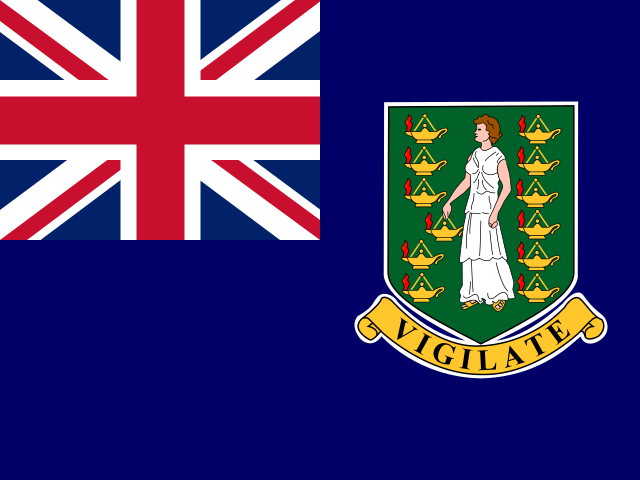
British Virgin Islands coverage
3
networks available
Which network you get
| Carrier | Role | 5G |
|---|---|---|
| Flow | Primary, used by default | yes, standalone |
| Digicel | Failover, used when the primary degrades | yes, standalone |
| CCT | Failover, used when the primary degrades | yes, standalone |
You do not choose between them. If the network you are on gets congested we move you to the other one automatically, in the middle of your trip, and tell you afterwards.
About these figures
The speed figures on this page show the typical download speed and the speed when the network is busy, for the country as a whole and for its main cities.
What happens in British Virgin Islands when the network is busy
Congestion is not a fault, it is a Tuesday evening. The question is what your eSIM can do about it, and for most travel eSIMs the answer is nothing: one wholesale agreement per country, one network, and no way out except buying a second eSIM from somebody else while standing in the street.
Here, Orbislo traffic runs over Flow, Digicel and CCT. When the network you are on degrades we move you to another one, mid trip, without you asking, and tell you afterwards rather than interrupting you at the time.
Mobile operators in British Virgin Islands
- Flow: Cable & Wireless (BVI), which trades as Flow, holds 101.6 MHz of mobile spectrum: 2x12 MHz at 700 MHz, 2x8.8 MHz at 850 MHz, 2x15 MHz of AWS-1 and 2x15 MHz at 1900 MHz.
- CCT: Caribbean Cellular Telephone holds the most mobile spectrum of the three networks, 164 MHz in total, spread across the 850 MHz, 900 MHz, 1900 MHz and 2.5 GHz bands.
- Digicel: Digicel (BVI) holds 112 MHz of mobile spectrum, made up of 2x11 MHz at 700 MHz, 2x15 MHz at 1800 MHz, 2x15 MHz of AWS-1 and 2x15 MHz at 1900 MHz.
- Unitary licences: Flow, CCT, Digicel and BVI Cable TV first received unitary licences in 2007, when the market was liberalised. All four were renewed in December 2022 for another 15 years, with regulator reviews every five years.
Older networks in British Virgin Islands
- Some mobile operators told the regulator in 2025 that they want to keep offering voice and messaging over 3G and 4G for the foreseeable future, so 3G and 4G spectrum could not yet be refarmed for 5G.
5G in British Virgin Islands
- CCT switched on the first 5G network in the Virgin Islands on 1 October 2025, with limited availability across much of the territory at launch, after upgrading its whole 4G LTE network to support the move.
- In March 2026 the regulator proposed a 5G spectrum award open only to the four unitary licence holders, offering each 2x10 MHz of low band and 70 to 100 MHz of mid band spectrum in the 600 MHz, 700 MHz, 2.3 GHz, 2.5 GHz and 3.3 to 3.7 GHz ranges.
- Holders of the proposed 5G authorisations would have to cover at least 98 percent of the population of each of Tortola, Anegada, Jost Van Dyke and Virgin Gorda and 95 percent of geographic locations, within five years on the standard rollout.
- The Virgin Islands has no frequency coordination agreement with the United States covering the neighbouring US Virgin Islands, and low band 5G signals can cause interference across 100 to 150 km of open water.
Network notes for British Virgin Islands
- Operators reported that Hurricane Irma in 2017 affected almost 90 percent of the mobile network in the Virgin Islands, and that fewer than a third of the affected sites had been restored more than a month later.
- Most mobile sites in the Virgin Islands are not built to withstand a Category 5 hurricane, which the regulator describes as a weakness of the networks today that will remain under any 5G rollout.
- After severe weather, the mobile operators must report outages to the regulator within two to three hours of the all clear, listing the areas and number of customers affected, and update restoration times every 12 hours.
- Four international submarine cable systems land in the British Virgin Islands: ECFS since 1995, CBUS to Bermuda since 2009, the East West cable to the Dominican Republic and Jamaica since 2011, and PCCS since 2015.
- Mobile connections in the Virgin Islands well exceed the population, partly because many people keep a second or third prepaid SIM to use promotions and cheap calls within the same network.
- As of April 2025 the regulator had not licensed any low earth orbit satellite provider to serve the Virgin Islands and was still building a licensing framework for them.
Questions about British Virgin Islands
Which network will I be on in British Virgin Islands?
What if I get no signal at all in British Virgin Islands?
Will my phone work in British Virgin Islands?
Coverage nearby
How British Virgin Islands compares across Caribbean
- Regional typical speed
- 37.6 Mbps
- Upstream networks
- 3, Flow, Digicel, CCT
- 5G
- Yes, on CCT since October 2025; Flow and Digicel are LTE only
- Cities with their own page
- 1: Road Town
Cities with their own page
- Road Town
- Terrance B. Lettsome International Airport, nearest airport EIS, 9 km from Road Town