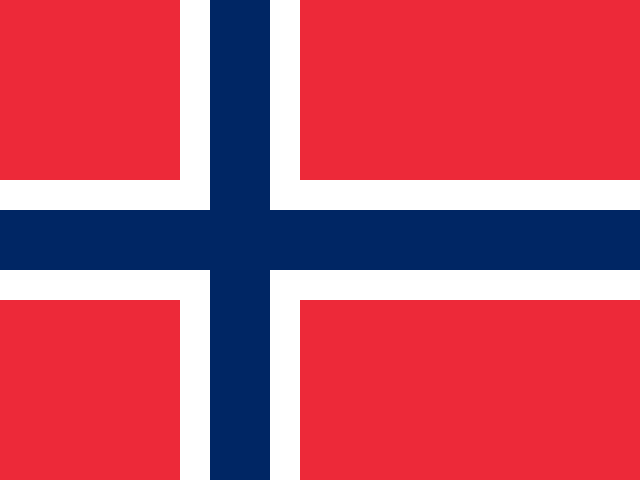
Norway eSIM
Data for Norway on Telenor and Telia, from $5.89. It never expires, tethering is included, and refills land on the line you already have, with nothing new to install.
- Networks
- Telenor and Telia
- Typical speed
- 97 Mbps typical, 31 Mbps at busy times
- 5G
- yes, standalone and non standalone
- Throttle
- None on metered plans
- Tethering
- Allowed on every plan

Plans for Norway
| Data | Validity | Price per GB | Price | Buy |
|---|---|---|---|---|
| 1 GB | Never expires | $5.89 | $5.89 | |
| 3 GB | Never expires | $2.63 | $7.89 | |
| 5 GBMost travellers | Never expires | $1.98 | $9.89 | |
| 10 GB | Never expires | $1.49 | $14.89 | |
| 20 GB | Never expires | $1.19 | $23.89 | |
| 50 GB | Never expires | $1.52 | $75.89 |
Every plan works the moment you land. Unused data returns to your wallet when the line closes, and customers get at least 100 MB of free rescue data a month even at zero balance.
What 97 Mbps actually means in Norway
Typical download speed on Orbislo in Norway: 97 Mbps. That puts Norway well above the Europe median of 71 Mbps.
The tenth percentile is 31 Mbps. That gap between the median and the floor is normal and it is where the frustration lives: the connection is quick most of the time and noticeably slow in the busiest few percent of moments, typically at transport hubs at peak hour.
At these speeds nothing on a phone is limited by the connection. Video calls are comfortable, a laptop can be tethered for a full working day, and large photo backups finish without planning around them.
Which networks you will be on
Orbislo carries traffic in Norway on Telenor and Telia. Your phone is not tied to one of them. When the network you are attached to congests or drops, the profile moves you to the other, and it happens without a prompt and without you noticing anything except that the connection kept working.
This matters more than the headline speed. Almost every travel eSIM sold today resells a single upstream agreement per country, so when that one network has a bad hour you have a bad hour with it and your only option is to buy a second eSIM from somebody else. A profile with more than one network behind it can make a decision you never see.
5G in Norway: yes, standalone and non standalone. Worth knowing that 5G on a travel profile is normal rather than special, and that the tenth percentile above is the number that will decide how the trip feels, not the generation label in the status bar.
What data costs in Norway
A 500 MB plan for Norway starts at $0.32, which is $0.00 a gigabyte. That is the number to compare between providers, because a headline price attached to a different allowance tells you nothing.
The comparison most providers would rather you did not run is cost per gigabyte actually used. Independent surveys of travel data put the share of purchased data lost to expiry between 20 and 35 percent, because a plan that expires on day thirty deletes what you did not get through. Orbislo data has no expiry date, so the gigabyte you paid for is still there on the next trip. At the same headline price that is 25 to 40 percent more usable data, and in Norway it means the effective cost is nearer $0.00 a gigabyte than $0.00.
Because nothing expires, the cheapest way to buy for Norway is to buy slightly less than you think you need and top up if you run out. Topping up takes about ten seconds and does not involve installing anything. Buying too much is the expensive mistake everywhere else and merely a neutral one here.
Landing in Norway
Install before you fly, on your home wifi. The profile downloads while you still have a connection you trust, then sits dormant until you land in Norway and it attaches to Telenor.
On landing there is one thing to check: data roaming has to be switched on for the Orbislo line. It is off by default on both iOS and Android, and it has nothing to do with roaming charges here, because the plan is prepaid and there is no bill to run up. Turn it on for the Orbislo line and leave it off for your home line, and your home number keeps working for calls and bank codes without costing anything.
Coverage across Norway
The figures above cover Norway as a whole, and a national figure hides real variation. We publish separate figures for Oslo, Bergen, Tromso and Lofoten, because the difference between a capital and a coastal town is usually larger than the difference between two countries.
Outside the cities, coverage follows the same pattern it does everywhere: the main roads and the tourist corridors are well served, and it thins in the mountains and on the water. No travel eSIM changes that, because it is the same physical network the local population uses. What a multi network profile changes is which of the available towers you get to use.
Getting a local SIM in Norway
Norwegian law makes every provider of a numbered person to person communications service identify the customer uniquely when an agreement is made, changed or ended, and the same duty applies when a number moves to another provider. The obligation sits in section 2-8 of the electronic communications act.
What is restricted in Norway
- ID for foreign buyers: A person without a Norwegian national identity number or D number must show an original, unexpired identity document giving date of birth, place of birth, citizenship and a photograph. The regulator lists foreign passports and national ID cards from other EEA countries as valid, but not emergency passports.
- Remote ID checks: The identity check does not have to happen in a shop. The regulator reads the rules as allowing verification without personal attendance, provided the operator's digital method is at least as secure as an in person document check, and electronic ID at a substantial or high level is accepted as an alternative.
- Messaging apps: The identification duty covers only number based services. The regulator names WhatsApp and Facebook Messenger as examples of number independent services, which the Norwegian identification rules do not cover.
- Internet blocking: Norwegian providers report blocking only in narrow cases: domain names blocked in DNS under a court order, the police child abuse filter, and ports closed against attacks such as DDoS. Speed tiers on mobile plans are allowed only if every application is treated alike.
Worth knowing about Norway
- Norway is inside the roam like at home area. The regulator lists it alongside the 27 European Union states, the French overseas departments, the Azores, Madeira, the Canaries, Iceland and Liechtenstein, and says the rules stop outside the European Economic Area.
- Norway runs three emergency numbers: 110 for fire, 112 for police and 113 for medical help. The regulator says 112 is the one to dial when you have no SIM card, no credit or no coverage from your own operator, because handsets and networks treat that number specially.
- Mobile networks aboard ferries, ships and aircraft in Norwegian waters are outside the roaming price rules, because they backhaul over satellite, and the regulator warns that prices on them are high.
- A new SIM card or an extra twin SIM on an existing Norwegian subscription counts as a change beyond the price plan, so the operator must identify the customer again before issuing it.
- Emergency calls from most smartphones send the caller's position automatically through Advanced Mobile Location, usually to within 50 metres, even if location services are switched off. Network based positioning alone can be off by anything from about a hundred metres to several kilometres.
- The regulator says Advanced Mobile Location works on Android phones from version 2.3.7 and on iPhones from iOS 11.3 onwards. Phones running neither Android nor iOS lack the feature, and their emergency calls are located only through the network.
- For police matters that are not urgent, the number is 02800, staffed around the clock. Emergency text messages to 110, 112 and 113 exist for deaf and speech impaired people, but only from mobile numbers registered in advance.
- Ship networks may only switch on outside the baseline, 3G from 2 nautical miles and 4G from 4. Out on deck a phone may still hold a land network, while inside the steel hull it tends to latch onto the ship's own expensive system.
- European roaming rules add safeguards for ship and aircraft networks. The customer must get a price text on connecting and a warning at 40 euros of use, and service must stop at 50 euros until the customer actively approves more, with a further warning at 100 euros.
How Norway compares across Europe
- Regional typical speed
- 71 Mbps
- Upstream networks
- 2, Telenor, Telia
- 5G
- Yes, standalone and non standalone
- Next fastest nearby
- Finland, 102 Mbps
- Next slowest nearby
- Estonia, 95 Mbps
- Cities with their own page
- 4: Oslo, Bergen, Tromso, Lofoten