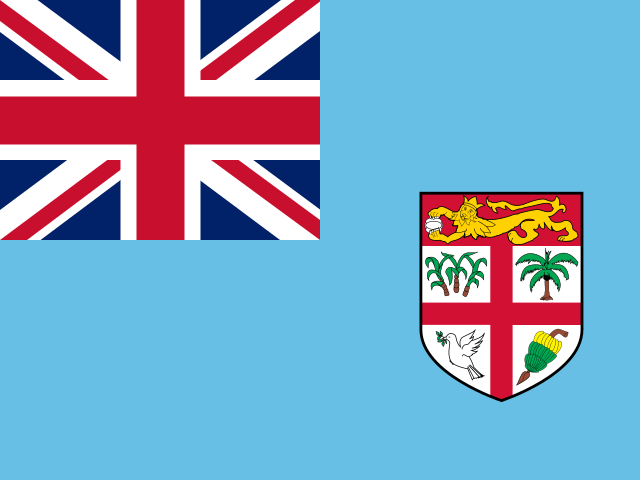
Figi: la copertura
22
Mbps tipici
5
Mbps nelle ore di punta
2
reti disponibili
Su quale rete finisci
| Operatore | Ruolo | 5G |
|---|---|---|
| Vodafone | Principale, usata di default | solo 4G |
| Digicel | Riserva, usata quando la principale peggiora | solo 4G |
Non scegli tu tra le due. Se la rete su cui sei si congestiona ti spostiamo sull'altra in automatico, in mezzo al viaggio, e te lo diciamo dopo.
Su questi dati
I dati di velocità di questa pagina mostrano la velocità di download tipica e la velocità quando la rete è carica, per il paese nel suo insieme e per le città principali.
Cosa vogliono dire i numeri di Figi
Contano due numeri e solo uno è quello che citano tutti. La velocità tipica, 22 Mbps, dice com'è un buon momento.
Il decimo percentile, 5 Mbps, è quello che vale la pena leggere. È la velocità nel decimo peggiore della giornata, quando la cella sopra la stazione è piena e tutti intorno a te ci sono dentro. Un paese con mediana alta e pavimento basso funziona benissimo, fino al momento in cui ti serve davvero.
Se il viaggio dipende da videochiamate o hotspot, pianifica sul dato delle ore di punta e non su quello tipico.
Cosa succede in Figi quando la rete è congestionata
La congestione non è un guasto, è un martedì sera. La domanda è cosa può farci la tua eSIM, e per quasi tutte le eSIM da viaggio la risposta è niente: un accordo all'ingrosso per paese, una rete, e nessuna via d'uscita se non comprare una seconda eSIM da qualcun altro mentre sei in mezzo alla strada.
Qui il traffico Orbislo passa da Vodafone e Digicel. Quando la rete su cui sei peggiora ti spostiamo su un'altra, a metà viaggio, senza che tu lo chieda, e te lo diciamo dopo invece di interromperti sul momento.
Figi: operatori mobili
- Vodafone Fiji: Fiji's communications minister described Vodafone as the operator with the largest market share in the country when it signed a universal service contract in March 2026 to connect 30 communities in Kadavu province.
- Digicel Fiji: Digicel Fiji is owned by Telstra, which completed its purchase of Digicel Pacific in 2022. Telstra described Digicel as the number two operator in Fiji and number one in Papua New Guinea, Nauru, Samoa, Tonga and Vanuatu.
- Telecom Fiji: Telecom Fiji Limited came out of the 1989 reform that separated postal and telecommunications functions, and was set up to run domestic fixed-line and data services while FINTEL ran the international gateway.
Figi: reti più vecchie
- Vodafone Fiji is decommissioning 2G to reuse the spectrum for 4G and 5G. SIM cards marked 2G or 3G, or old unlabelled ones, need replacing, while phones that support 3G or 4G keep working at sea and on farms.
- Digicel Fiji still runs 3G. Outside its 5G coverage, phones fall back automatically to 4G or 3G, and the company is reusing 4G equipment to extend coverage to new places.
Figi: il 5G
- The Ministry of Communications issued 5G spectrum licences to Digicel Fiji, Vodafone Fiji and Telecom Fiji, effective 15 September 2025, with rollout phased by town from 2025 and the government upgrading rural and maritime networks to 4G at the same time.
- Vodafone's 5G licence obligations start with Suva, Nadi, Lautoka and Denarau in 2025, then Nasinu, Lami, Labasa and Savusavu from 2026, and Nausori, Sigatoka, Navua, Ba, Tavua, Rakiraki, Korovou and Taveuni from 2027 into 2028.
- Digicel Fiji built its 5G on Nokia equipment in parts of Suva, Nadi and Lautoka. At launch, Apple and Samsung phones could not connect until the manufacturers released software updates certifying them for the network.
Figi: note sulla rete
- Fiji held its first 4G spectrum auction in 2013, which opened the way for LTE networks to scale up alongside 3G.
- Tropical cyclones Evan, Winston, Gita, Harold, Yasa and Mal damaged towers and equipment between 2012 and 2023, with outages and slow repairs hitting rural and maritime areas hardest. Loss of grid power is the network's main weakness during storms.
- Remote villages are being connected through government-funded universal service contracts. The Kadavu rollout, for example, uses satellite-linked shared Wi-Fi centres where residents buy data vouchers, rather than full mobile coverage.
- Suva is a Pacific cable hub, landing Southern Cross (2000), the Tonga Cable (2013), ICN1 to Vanuatu (2014), Tui-Samoa (2018), Southern Cross NEXT and Gondwana-2 to New Caledonia (2022). Savusavu on Vanua Levu has its own landings of Southern Cross NEXT and Tui-Samoa.
- By 2023 Fiji's regulator was working towards a second submarine cable landing station to strengthen the country's international bandwidth security and digital resilience.
- More cables are planned for Fiji: Bulikula and Tabua, both due in 2026 and landing at Suva and Natadola, and APX East, due in 2028, which will link Suva with Sydney, Hawaii and San Diego.
- Vodafone Fiji supports VoLTE and publishes a list of compatible handsets. If the person you call has no VoLTE, the call falls back to a standard voice connection rather than failing.
Figi: domande frequenti
Su quale rete sarò in Figi?
Quanto sono veloci davvero i dati?
Posso collegare un portatile in hotspot?
La velocità cambia all'interno di Figi?
E se in Figi non prendo affatto?
Il mio telefono funzionerà in Figi?
La copertura qui vicino
Come si colloca Fiji in Oceania
- Velocità tipica della regione
- 30.5 Mbps
- Reti utilizzate
- 2, Vodafone, Digicel
- 5G
- 4G only
- Vicino più veloce
- French Polynesia, 39 Mbps
- Vicino più lento
- Samoa, 21 Mbps
- Città con una pagina propria
- 2: Nadi, Suva
Destinazioni vicine in Oceania
- Australia
- Australia, 76 Mbps, 2 reti
- New Zealand
- New Zealand, 68 Mbps, 2 reti
- Guam
- Guam, 52 Mbps, 2 reti
- New Caledonia
- New Caledonia, 44 Mbps, 1 reti
- French Polynesia
- French Polynesia, 39 Mbps, 2 reti
- Samoa
- Samoa, 21 Mbps, 2 reti
- Vanuatu
- Vanuatu, 20 Mbps, 2 reti
- Papua New Guinea
- Papua New Guinea, 19 Mbps, 2 reti
- Tonga
- Tonga, 18 Mbps, 2 reti