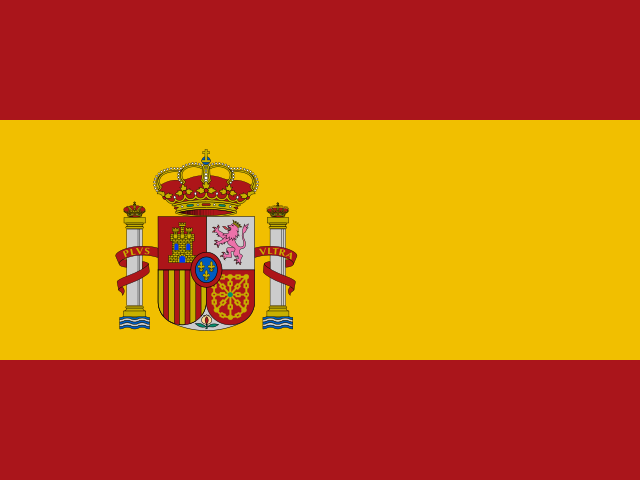
Espanha: cobertura móvel
79
Mbps típicos
23
Mbps na hora cheia
2
redes disponíveis
Qual rede você pega
| Operadora | Função | 5G |
|---|---|---|
| Movistar | Principal, usada por padrão | sim, non standalone |
| Orange | Reserva, usada quando a principal piora | sim, non standalone |
Você não escolhe entre elas. Se a rede em que você está congestiona, a gente te move para a outra automaticamente, no meio da viagem, e conta depois.
Sobre estes números
Os números de velocidade desta página mostram a velocidade de download típica e a velocidade quando a rede está cheia, para o país como um todo e para as principais cidades.
O que os números de Espanha querem dizer
Dois números importam e só um deles é o que todo mundo cita. A velocidade típica, 79 Mbps, diz como é um bom momento.
O décimo percentil, 23 Mbps, é o que vale a pena ler. É a velocidade no décimo pior do dia, quando a antena em cima da estação está cheia e todo mundo à sua volta está nela. Um país com mediana alta e piso baixo é um país que funciona lindamente até a hora em que você realmente precisa.
Se a viagem depende de videochamadas ou de roteamento, planeje pelo número da hora cheia e não pelo típico.
O que acontece em Espanha quando a rede fica cheia
Congestionamento não é defeito, é uma terça à noite. A pergunta é o que o seu eSIM pode fazer a respeito, e na maioria dos eSIMs de viagem a resposta é nada: um acordo de atacado por país, uma rede e nenhuma saída além de comprar um segundo eSIM de outra empresa parado na rua.
Aqui o tráfego da Orbislo passa por Movistar e Orange. Quando a rede em que você está piora, movemos você para outra, no meio da viagem, sem você pedir, e contamos depois em vez de interromper na hora.
Operadoras móveis em Espanha
- Market share: Spain had 63.24 million mobile lines in June 2026, or 127.6 per 100 inhabitants. Movistar, Vodafone and MasOrange held 85.5 percent of them, rising to 98.1 percent with Digi, according to the competition and markets regulator CNMC.
- MasOrange: The European Commission approved the Orange and MasMovil joint venture with conditions on 20 February 2024, finding that it would create Spain's largest operator by customer numbers. Before the deal MasMovil relied on national roaming on Orange where its own network did not reach.
- Digi: To clear the MasOrange merger, MasMovil spectrum at 1800 MHz, 2100 MHz and 3.5 GHz went to Digi, then Spain's largest virtual operator, so it could build its own network, together with an optional national roaming deal for areas that network does not reach.
Redes antigas em Espanha
- In December 2025 the digital transformation ministry opened a consultation on retiring 2G and 3G, to set switch off calendars by operator and technology and to guarantee that calls to 112 keep working. It closed on 20 January 2026.
- The 2G and 3G switch off frees spectrum mainly in the 900 MHz and 2100 MHz bands for 4G and 5G. The ministry singled out eCall in cars, alarms, lifts and tracking devices as services that need migrating first.
- Vodafone Spain began switching off 3G in stages in 2022, and by the end of 2024 it was gone in the main cities and metropolitan areas such as Madrid and Barcelona. A device that relies on 3G alone can no longer connect there.
- The Canary Islands used European 112 Day in February 2026 to warn about possible failures reaching 112 after 2G and 3G networks close, a risk for older phones and devices that still depend on those networks.
O 5G em Espanha
- The auction of 200 MHz in the 3.6 to 3.8 GHz band under Order ETU/531/2018, for 5G took 34 rounds and raised 437.65 million euros in bids, more than four times the reserve price.
- Telefónica, Vodafone and Orange applied to bid in the 700 MHz auction that began in July 2021, after the band was cleared of digital terrestrial television during 2020. The auction offered 75 MHz in seven national licences, capped at 2 x 15 MHz of paired 700 MHz spectrum per operator.
- The December 2022 auction of the 26 GHz band raised 36.2 million euros: Telefónica, Vodafone and Orange took 1,800 MHz of the 2,400 MHz offered nationally, on 20 year licences renewable once.
- The government's 2025 broadband coverage report, published in May 2026, puts 5G coverage at 99.27 percent of the population and above 96 percent in rural areas. Standalone 5G reaches 98.1 percent, and the 3.5 GHz band 89.99 percent.
- 5G carried 23 percent of Spain's mobile data traffic in the first quarter of 2026, after growing 54.2 percent in a year, while total mobile broadband traffic rose 17.8 percent to 2.7 million terabytes.
Notas sobre a rede em Espanha
- The October 2024 DANA floods and the 28 April 2025 Iberian power blackout both caused significant interruptions to Spanish telecom services. A draft royal decree would require operators to prepare contingency plans for such incidents and keep calls to 112 working.
- Under the draft resilience decree, certain network infrastructure would need enough backup power to keep running for several hours during a blackout, with protocols to prioritise some kinds of traffic in a crisis.
Espanha: perguntas frequentes
Em qual rede eu vou estar na Espanha?
Qual é a velocidade real dos dados?
Posso dividir a internet com o notebook?
A velocidade varia dentro de Espanha?
E se eu não pegar sinal nenhum em Espanha?
Meu celular vai funcionar na Espanha?
Cobertura por perto
Como Spain se compara em Europa
- Velocidade típica da região
- 71 Mbps
- Redes utilizadas
- 2, Movistar, Orange
- 5G
- Yes, non standalone
- Vizinho mais rápido
- Iceland, 81 Mbps
- Vizinho mais lento
- Belgium, 77 Mbps
- Cidades com página própria
- 4: Barcelona, Madrid, Seville, Valencia
Destinos próximos em Europa
- Austria
- Austria, 86 Mbps, 2 redes
- Lithuania
- Lithuania, 86 Mbps, 2 redes
- Monaco
- Monaco, 84 Mbps, 1 redes
- Latvia
- Latvia, 82 Mbps, 2 redes
- Iceland
- Iceland, 81 Mbps, 2 redes
- Belgium
- Belgium, 77 Mbps, 2 redes
- Portugal
- Portugal, 74 Mbps, 2 redes
- Slovenia
- Slovenia, 74 Mbps, 2 redes
- Bulgaria
- Bulgaria, 72 Mbps, 2 redes
- France
- France, 71 Mbps, 2 redes
Cidades com página própria
- Barcelona
- Josep Tarradellas Barcelona-El Prat Airport, aeroporto mais próximo BCN, 12 km de Barcelona
- Madrid
- Adolfo Suárez Madrid-Barajas Airport, aeroporto mais próximo MAD, 14 km de Madrid
- Seville
- Seville Airport, aeroporto mais próximo SVQ, 8 km de Seville
- Valencia
- Valencia Airport, aeroporto mais próximo VLC, 9 km de Valencia